Buy sdml.org ?
We are moving the project
sdml.org .
Are you interested in purchasing the domain
sdml.org ?
domain@kv-gmbh.de · 0541-91531010
Buy sdml.org ?
Why is the Middle Ages actually called the Middle Ages?
The Middle Ages is called so because it is the period of time between the fall of the Roman Empire in the 5th century and the beginning of the Renaissance in the 14th century. It is considered the "middle" period between the classical antiquity of the Roman Empire and the modern era. This period is also known as the medieval period, and it is characterized by the development of feudalism, the rise of Christianity, and the dominance of monarchies in Europe. **
What did people in the Middle Ages call the Middle Ages?
During the Middle Ages, people did not refer to that time period as the "Middle Ages." Instead, they viewed themselves as living in the present time and did not have a specific term to describe their era. The concept of dividing history into distinct periods, such as the Middle Ages, Renaissance, and Modern era, was developed by later historians looking back on history. The term "Middle Ages" was first coined in the 15th century by Renaissance scholars who viewed the period between the fall of the Roman Empire and their own time as a "middle" or intermediate period. **

Similar search terms for Ages
Top-Angebote
Products related to Ages:
-
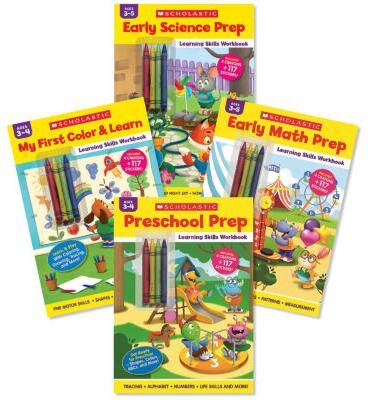
Learning Skills Workbook Ages 3-5 Value PackSupport your child's preschool readiness with these fun workbooks. Each workbook comes with four crayons and stickers.This set includes:Early Math Prep Learning Skills WorkbookEarly Science Prep: Learning Skills WorkbookMy First Color & Learn:...32,99 $*Shipping: 0,00 $Secure redirect to the provider
-
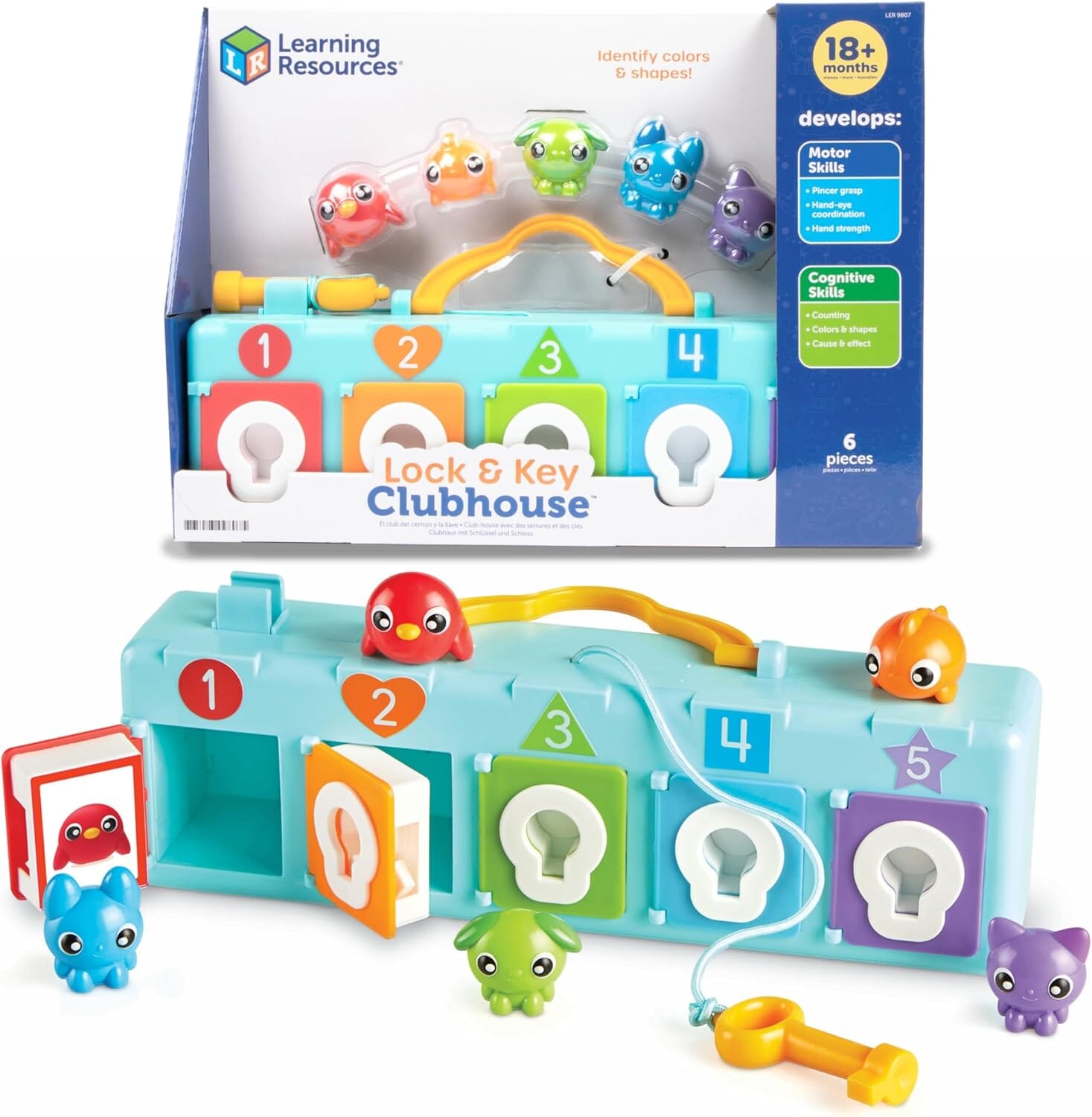
Learning Resources Lock & Key Clubhouse - Ages 18 Months+ - Educational Toy Learning ResourcesUnlock the doors to learning with the Lock & Key Clubhouse! This adorable fine motor skills toy builds co-ordination, hand strength and dexterity with every turn of the key! Discover 5 fun surprises behind the doors. Use the attached chunky key to unlock and open the doors, counting 1, 2, 3, 4, 5 as you go. Find the friendly birdie, fish, puppy, bunny and kitty. There’s a lot of learning packed into this playset. See the shapes above each door! There’s a circle, heart, triangle, square and star. Each also has a different colour and number. The peekaboo aspect of this toy helps children grasp the concept of object permanence, which is an essential early years cognitive milestone.22,99 £*Shipping: 2,99 £Secure redirect to the provider
-
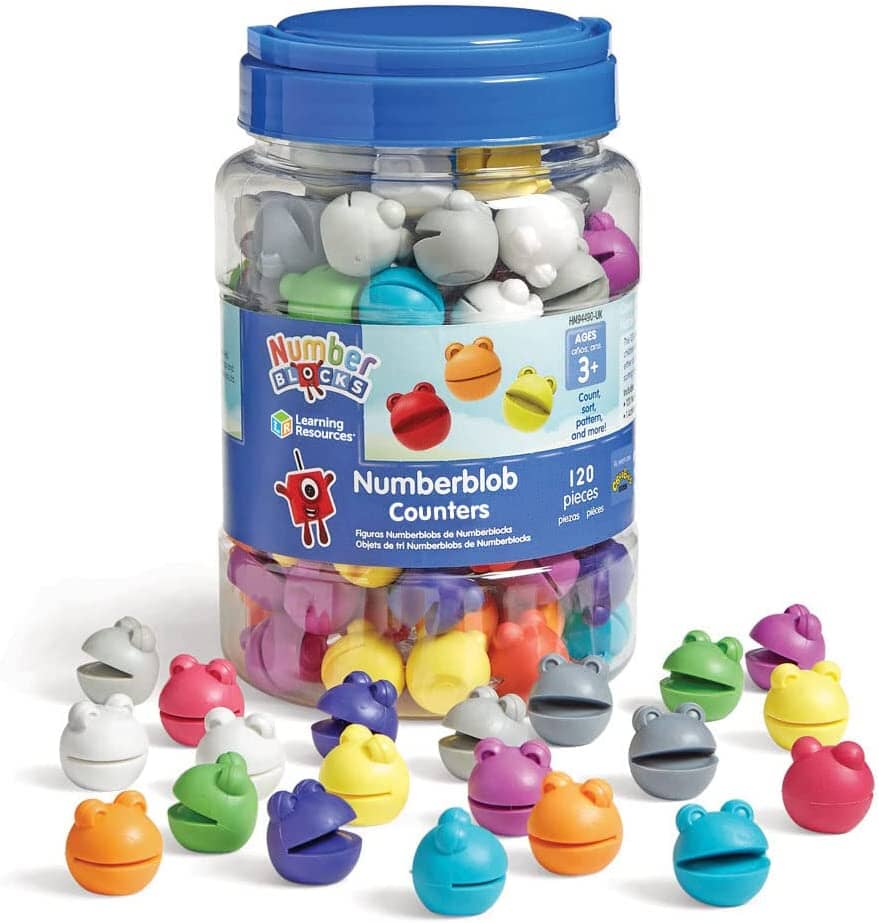
Numberblocks Numberblob Counters Set by Learning Resources - Ages 3 Years+ Learning ResourcesNUMBERBLOCKS AS SEEN ON TV: Bring the magic of on-screen maths learning with the Numberblocks TV series to life in the classroom with these Numberblocks Numberblob Counters VERSATILE TEACHING RESOURCE: Use these counters for teaching a range of essential early years maths skills including counting, sequencing, grouping, patterning, sorting, addition, subtraction, subitising, cardinality, and more MULTIPLE WAYS TO SORT: Numberblob Counters have open and closed mouth poses, and shapes on the bottom of the counters and are ideal for a variety of sorting activities FUN TO USE: These adorable Numberblob Counters are made from high-quality, soft, durable plastic that children will enjoy handling; counters are easy to wipe clean, and store neatly in the convenient storage tub with carry handle INCLUDES: 120 counters in fun Numberblocks unique colours – white, yellow, light orange, dark pink, red, turquoise, blue, purple, green, light grey, and dark grey, plus teacher-developed guide; counters measure 2cm in diameter14,99 £*Shipping: 2,99 £Secure redirect to the provider
-
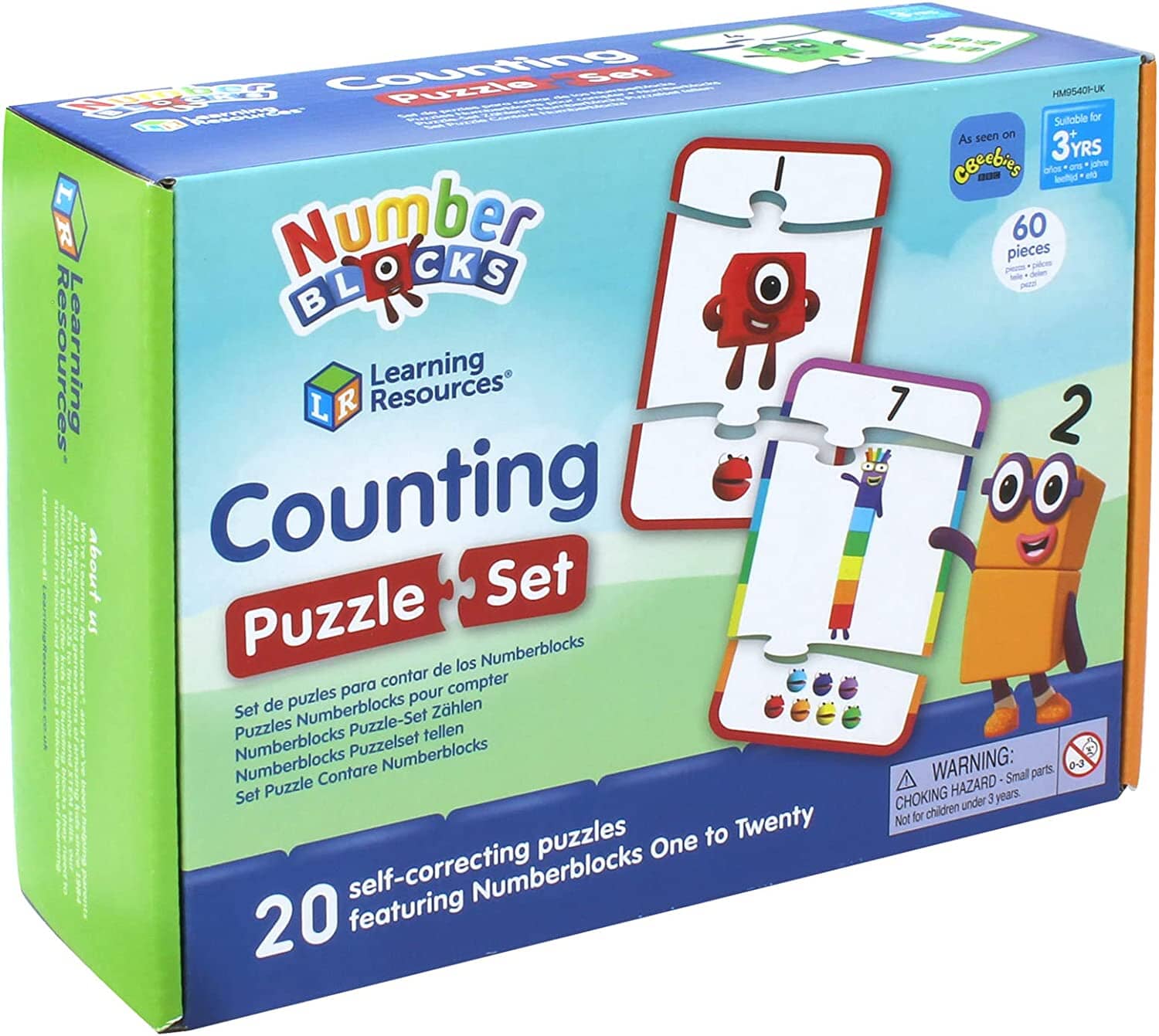
Numberblocks Counting Puzzle Set by Learning Resources - Ages 3 Years+ Learning ResourcesNUMBERBLOCKS AS SEEN ON TV: Learn to count from 1–20 with the friendly Numberblocks! These Numberblocks jigsaw puzzles are based on the friendly characters children know and love from the award-winning TV series. COUNT FROM 1–20: Make learning to count fun! As children complete the 20 counting puzzles, they’ll be counting the Numberblocks and Numberblobs, identifying each Numberblock’s Numberling, as well as building colour recognition and fine motor skills. MATCH NUMBERS & PICTURES: Match the Numberblock to its Numberling, and then see if you can match the puzzle piece with the correct number of Numberblobs to complete the puzzle. SELF-CORRECTING PUZZLES: Each of these clever self-correcting Numberblocks counting puzzles fits together in a unique way, so there’s only one right answer. INCLUDES: 20 x 3-piece puzzles. The chunky pieces are made from durable card and are easy for little hands to hold. Pieces store in the reusable packaging after play. Completed puzzles measure 15cm L x 10cm W.14,99 £*Shipping: 2,99 £Secure redirect to the provider
-
Why is whiskey and cola for ages 18 and wine for ages 16?
Whiskey and cola is typically considered a stronger alcoholic beverage, and the legal drinking age for stronger alcoholic drinks is generally higher than for milder ones. Wine is often considered a lighter alcoholic beverage, and therefore the legal drinking age for wine is lower. These age restrictions are based on the perceived maturity and ability to handle the effects of different types of alcohol. Additionally, cultural and historical factors also play a role in determining the legal drinking age for different types of alcohol in different countries. **
-
What is the name for the book genre mixture of technology and the Middle Ages?
The name for the book genre mixture of technology and the Middle Ages is "steampunk." Steampunk combines elements of science fiction, fantasy, and historical fiction, often set in a world where steam power is prevalent and advanced technology coexists with Victorian-era aesthetics. This genre typically features anachronistic inventions, industrial machinery, and a focus on the impact of technology on society during a time reminiscent of the Industrial Revolution. **
-
How were buildings constructed in the Middle Ages and in ancient times without modern technology?
In ancient times and the Middle Ages, buildings were constructed using manual labor and simple tools such as hammers, chisels, and saws. Skilled craftsmen, such as stonemasons and carpenters, played a crucial role in the construction process, using their expertise to shape and assemble the materials. Additionally, techniques such as using wooden scaffolding and pulleys were employed to lift heavy materials and reach higher areas. The construction process was often slow and labor-intensive, but the resulting structures were durable and impressive, standing the test of time. **
-
What characterizes the Dark Ages?
The Dark Ages, also known as the Early Middle Ages, were characterized by a decline in centralized authority, cultural stagnation, and economic instability following the fall of the Western Roman Empire. This period saw a lack of significant advancements in science, technology, and the arts, as well as a decrease in urbanization and trade. The Dark Ages were marked by frequent invasions, warfare, and the spread of disease, leading to a general sense of insecurity and a focus on survival rather than progress. **

What characterizes the Middle Ages?
The Middle Ages, also known as the medieval period, is characterized by a feudal social structure with kings, lords, and serfs. It was a time of great religious influence, with the Catholic Church playing a central role in people's lives. The period was marked by widespread illiteracy, limited scientific and technological advancements, and a focus on agriculture and rural life. The Middle Ages also saw the rise of chivalry and the code of honor among knights, as well as the construction of magnificent cathedrals and castles. **
Is the Apriori algorithm associated with machine learning or data mining?
The Apriori algorithm is associated with data mining. It is a classic algorithm used for association rule mining in large datasets. It is specifically used to identify frequent itemsets in transactional databases. While it is often used in the context of machine learning tasks, its primary application is in data mining for discovering patterns and relationships in data. **
Top-Angebote
Products related to Ages:
-
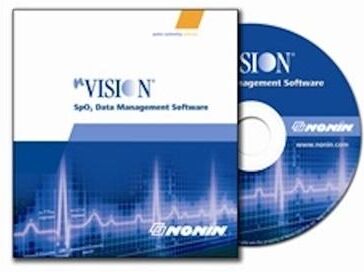
Nonin Medical nVision Data Management Software for Oximetry Screening""" nVision SpO2 Data Management Software Nonin's innovation in pulse oximetry has led to the development of an easy oximetry reporting solution nVISION. Designed to provide effortless viewing, professional analysis, report generation and reliable..."441,00 $*Shipping: 0,00 $Secure redirect to the provider
-
Junior Learning CCVC Bubble Boards, for Ages 5+Children will enjoy blending out words as they pop the bubbles for each sound and identify different phonemes words with Junior Learning's CCVC Bubble Boards. The letters are color-coded where consonants are in blue and short vowels are in red.33,49 $*Shipping: 0,00 $Secure redirect to the provider
-
Learning Skills Workbook Ages 3-5 Value PackSupport your child's preschool readiness with these fun workbooks. Each workbook comes with four crayons and stickers.This set includes:Early Math Prep Learning Skills WorkbookEarly Science Prep: Learning Skills WorkbookMy First Color & Learn:...32,99 $*Shipping: 0,00 $Secure redirect to the provider
-
Learning Resources Lock & Key Clubhouse - Ages 18 Months+ - Educational Toy Learning ResourcesUnlock the doors to learning with the Lock & Key Clubhouse! This adorable fine motor skills toy builds co-ordination, hand strength and dexterity with every turn of the key! Discover 5 fun surprises behind the doors. Use the attached chunky key to unlock and open the doors, counting 1, 2, 3, 4, 5 as you go. Find the friendly birdie, fish, puppy, bunny and kitty. There’s a lot of learning packed into this playset. See the shapes above each door! There’s a circle, heart, triangle, square and star. Each also has a different colour and number. The peekaboo aspect of this toy helps children grasp the concept of object permanence, which is an essential early years cognitive milestone.22,99 £*Shipping: 2,99 £Secure redirect to the provider
-
Why is the Middle Ages actually called the Middle Ages?
The Middle Ages is called so because it is the period of time between the fall of the Roman Empire in the 5th century and the beginning of the Renaissance in the 14th century. It is considered the "middle" period between the classical antiquity of the Roman Empire and the modern era. This period is also known as the medieval period, and it is characterized by the development of feudalism, the rise of Christianity, and the dominance of monarchies in Europe. **
-
What did people in the Middle Ages call the Middle Ages?
During the Middle Ages, people did not refer to that time period as the "Middle Ages." Instead, they viewed themselves as living in the present time and did not have a specific term to describe their era. The concept of dividing history into distinct periods, such as the Middle Ages, Renaissance, and Modern era, was developed by later historians looking back on history. The term "Middle Ages" was first coined in the 15th century by Renaissance scholars who viewed the period between the fall of the Roman Empire and their own time as a "middle" or intermediate period. **
-
Why is whiskey and cola for ages 18 and wine for ages 16?
Whiskey and cola is typically considered a stronger alcoholic beverage, and the legal drinking age for stronger alcoholic drinks is generally higher than for milder ones. Wine is often considered a lighter alcoholic beverage, and therefore the legal drinking age for wine is lower. These age restrictions are based on the perceived maturity and ability to handle the effects of different types of alcohol. Additionally, cultural and historical factors also play a role in determining the legal drinking age for different types of alcohol in different countries. **
-
What is the name for the book genre mixture of technology and the Middle Ages?
The name for the book genre mixture of technology and the Middle Ages is "steampunk." Steampunk combines elements of science fiction, fantasy, and historical fiction, often set in a world where steam power is prevalent and advanced technology coexists with Victorian-era aesthetics. This genre typically features anachronistic inventions, industrial machinery, and a focus on the impact of technology on society during a time reminiscent of the Industrial Revolution. **
Similar search terms for Ages
-
Numberblocks Numberblob Counters Set by Learning Resources - Ages 3 Years+ Learning ResourcesNUMBERBLOCKS AS SEEN ON TV: Bring the magic of on-screen maths learning with the Numberblocks TV series to life in the classroom with these Numberblocks Numberblob Counters VERSATILE TEACHING RESOURCE: Use these counters for teaching a range of essential early years maths skills including counting, sequencing, grouping, patterning, sorting, addition, subtraction, subitising, cardinality, and more MULTIPLE WAYS TO SORT: Numberblob Counters have open and closed mouth poses, and shapes on the bottom of the counters and are ideal for a variety of sorting activities FUN TO USE: These adorable Numberblob Counters are made from high-quality, soft, durable plastic that children will enjoy handling; counters are easy to wipe clean, and store neatly in the convenient storage tub with carry handle INCLUDES: 120 counters in fun Numberblocks unique colours – white, yellow, light orange, dark pink, red, turquoise, blue, purple, green, light grey, and dark grey, plus teacher-developed guide; counters measure 2cm in diameter14,99 £*Shipping: 2,99 £Secure redirect to the provider
-
Numberblocks Counting Puzzle Set by Learning Resources - Ages 3 Years+ Learning ResourcesNUMBERBLOCKS AS SEEN ON TV: Learn to count from 1–20 with the friendly Numberblocks! These Numberblocks jigsaw puzzles are based on the friendly characters children know and love from the award-winning TV series. COUNT FROM 1–20: Make learning to count fun! As children complete the 20 counting puzzles, they’ll be counting the Numberblocks and Numberblobs, identifying each Numberblock’s Numberling, as well as building colour recognition and fine motor skills. MATCH NUMBERS & PICTURES: Match the Numberblock to its Numberling, and then see if you can match the puzzle piece with the correct number of Numberblobs to complete the puzzle. SELF-CORRECTING PUZZLES: Each of these clever self-correcting Numberblocks counting puzzles fits together in a unique way, so there’s only one right answer. INCLUDES: 20 x 3-piece puzzles. The chunky pieces are made from durable card and are easy for little hands to hold. Pieces store in the reusable packaging after play. Completed puzzles measure 15cm L x 10cm W.14,99 £*Shipping: 2,99 £Secure redirect to the provider
-
My First Salah Picture Book By Learning Roots - Ages 7+ - Hardback Learning RootsGet ready to learn about one of the most important things in Islam – prayer! This Kiitab-enabled book is perfect for kids who want to understand the purpose and meaning of prayer, and how it connects us to God. With easy-to-follow instructions and colorful illustrations, this book will guide you through each step of the prayer process. You'll learn everything from how to prepare yourself for prayer to the movements and recitations you need to make. But that's not all – this book will also help you understand why prayer is so important in Islam. You'll discover the many benefits of establishing a daily prayer routine, including how it can help you develop self-discipline, find inner peace, and connect with Allah. So get ready to embark on an exciting journey of discovery as you learn about the beauty and significance of prayer in Islam!17,99 £*Shipping: 2,99 £Secure redirect to the provider
-
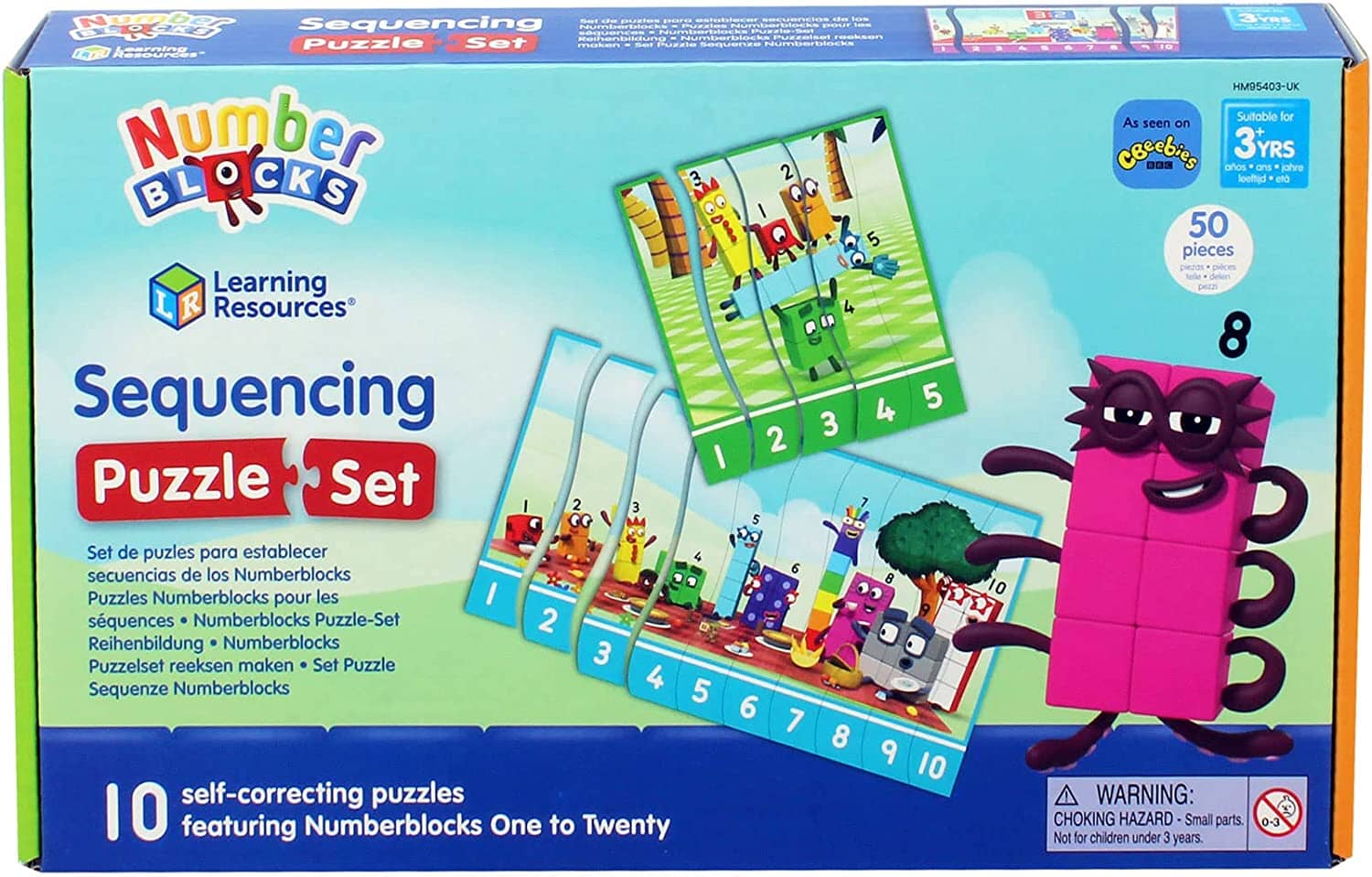
Numberblocks Sequencing Puzzle by Learning Resources - Ages 3 Years+ - Educational Toy Learning ResourcesNUMBERBLOCKS AS SEEN ON TV: Help children learn to sequence the numbers 1–20 in the correct order with their friends Numberblocks One to Twenty from the hit TV series. LEARN TO COUNT 1–20: Make learning to count 1–20 in the correct order fun for young children! As children complete the 20 colourful puzzles, they’ll be building basic maths skills along with colour recognition and fine motor skills. MATCH NUMBERS & PICTURES: Start with the 1-5 Numberblocks sequencing puzzles – can you put your friends One, Two, Three, Four, and Five in the correct order? As children learn and grow, progress to the next puzzle. PERFECT FOR LEARNING: Each of these Numberblocks maths puzzles is colour-coded for easy set-up. Each puzzle also has a number line, a teaching tool to help children sequence numbers and use to solve simple maths problems. INCLUDES: 10 double-sided puzzles - 4 each of puzzles for 1–5 (13cm L x 15cm W) and 1–10 (26cm L x 15cm W) and 2 for numbers 1–20 (51cm L x 15cm W).11,99 £*Shipping: 2,99 £Secure redirect to the provider
-
How were buildings constructed in the Middle Ages and in ancient times without modern technology?
In ancient times and the Middle Ages, buildings were constructed using manual labor and simple tools such as hammers, chisels, and saws. Skilled craftsmen, such as stonemasons and carpenters, played a crucial role in the construction process, using their expertise to shape and assemble the materials. Additionally, techniques such as using wooden scaffolding and pulleys were employed to lift heavy materials and reach higher areas. The construction process was often slow and labor-intensive, but the resulting structures were durable and impressive, standing the test of time. **
-
What characterizes the Dark Ages?
The Dark Ages, also known as the Early Middle Ages, were characterized by a decline in centralized authority, cultural stagnation, and economic instability following the fall of the Western Roman Empire. This period saw a lack of significant advancements in science, technology, and the arts, as well as a decrease in urbanization and trade. The Dark Ages were marked by frequent invasions, warfare, and the spread of disease, leading to a general sense of insecurity and a focus on survival rather than progress. **
-
What characterizes the Middle Ages?
The Middle Ages, also known as the medieval period, is characterized by a feudal social structure with kings, lords, and serfs. It was a time of great religious influence, with the Catholic Church playing a central role in people's lives. The period was marked by widespread illiteracy, limited scientific and technological advancements, and a focus on agriculture and rural life. The Middle Ages also saw the rise of chivalry and the code of honor among knights, as well as the construction of magnificent cathedrals and castles. **
-
Is the Apriori algorithm associated with machine learning or data mining?
The Apriori algorithm is associated with data mining. It is a classic algorithm used for association rule mining in large datasets. It is specifically used to identify frequent itemsets in transactional databases. While it is often used in the context of machine learning tasks, its primary application is in data mining for discovering patterns and relationships in data. **
* All prices are inclusive of VAT and, if applicable, plus shipping costs. The offer information is based on the details provided by the respective shop and is updated through automated processes. Real-time updates do not occur, so deviations can occur in individual cases. ** Note: Parts of this content were created by AI.